









The Six-Syllable Mantra (ॐ मणि पद्मे हूँ)
The Six-Syllable Mantra (ॐ मणि पद्मे हूँ) — The Heart Mantra of Avalokiteshvara
1. Core Summary
The Buddhist Six-Syllable Mantra, "Om Maṇi Padme Hūṃ," is the most sacred and central mantra in Tibetan Buddhism. It is revered as the compassionate essence of Avalokiteshvara (the Bodhisattva of Compassion) and the synthesis of the wisdom of all Buddhas. These six syllables constitute a complete system of spiritual purification; their sonic vibrations are believed to directly purge the six root delusions—pride, jealousy, desire, ignorance, greed, and hatred—thereby closing the gates to the six realms of cyclic existence and perfecting the corresponding six virtues of enlightenment. For practitioners and spiritual seekers yearning for inner purification and the awakening of compassion and wisdom, reciting or wearing this mantra is a sublime method to establish a direct connection with the purest compassionate force in the universe.
2. History and Religious Origins
The Six-Syllable Mantra originated from the Esoteric traditions of Mahayana Buddhism in India. Its complete Sanskrit form is "ॐ मणि पद्मे हूँ" (Om Maṇi Padme Hūṃ), which later traveled to Tibet, becoming the foundational mantra honored by all schools of Tibetan Buddhism.
·
Maṇi: Means "Jewel," symbolizing Bodhicitta—the great vow to attain enlightenment for the benefit of all sentient beings. This is the source of all merit and virtue, and thus, the most precious.
·
·
Padme: Means "Lotus," symbolizing Wisdom—specifically the Prajna wisdom that realizes the empty nature of all phenomena. Like a lotus blooming untainted by mud, wisdom flourishes pure and clean amidst the delusions of the mundane world.
·
The profound meaning of the entire mantra is: "May I and all beings, through the jewel-like Bodhicitta and the lotus-like wisdom, achieve purification and enlightenment." In Tibetan culture, it is carved into Mani stones, printed on prayer flags fluttering in the wind, and spun in prayer wheels, representing ceaseless prayer and cultivation.
3. Spiritual Significance and Deep Interpretation
Each syllable of the Six-Syllable Mantra corresponds to the purification of a specific life struggle and invokes a noble quality of liberation, forming a precise map of transformation:
·
Om (嗡): Purifies the root delusion of Pride (Ego). Pride leads to self-centeredness and a sense of separation from others and the universe. It invokes the Dharmakaya state of Vairocana Buddha, teaching us humility and the realization of universal interconnectedness.
·
·
Ma (嘛): Purifies the root delusion of Jealousy. Jealousy brings the pain of comparison and inner imbalance. It invokes the fierce power of Vajrapani Bodhisattva, transforming the energy of envy into the courage to protect the weak and overcome obstacles.
·
·
Ni (呢): Purifies the root delusion of Desire (Attachment). Desire is the endless craving for and possession of people and things. It invokes the unconditional love of Avalokiteshvara, guiding us to transform selfish taking into selfless sharing and profound empathy.
·
·
Pad (呗): Purifies the root delusion of Ignorance (Avidya). Ignorance is spiritual blindness and confusion regarding the truth of life. It invokes the sharp wisdom of Manjushri Bodhisattva, illuminating the darkness within to reveal discernment and insight into the nature of reality.
·
·
Me (美): Purifies the root delusion of Greed (Sense of Lack). Greed stems from deep-seated dissatisfaction and stinginess. It invokes the vast vow-power of Kshitigarbha Bodhisattva, transforming spiritual poverty into a consciousness of abundance and a generous heart.
·
·
Hūṃ (吽): Purifies the root delusion of Hatred (Anger). Hatred is the root of all wrath and destructive emotions. It invokes the pure merit of Sarvanivarana-Vishkambhin Bodhisattva, calming the inner storm and birthing forgiveness, patience, and ultimate compassion.
·
Reciting the mantra in full is an all-encompassing purification and elevation of consciousness, transforming negative emotions into the radiance of Buddha-nature.
4. Crafted Interpretation
At Talisman.jewelry, we approach this sublime heart mantra with reverence, transforming it into a wearable form of silent cultivation.
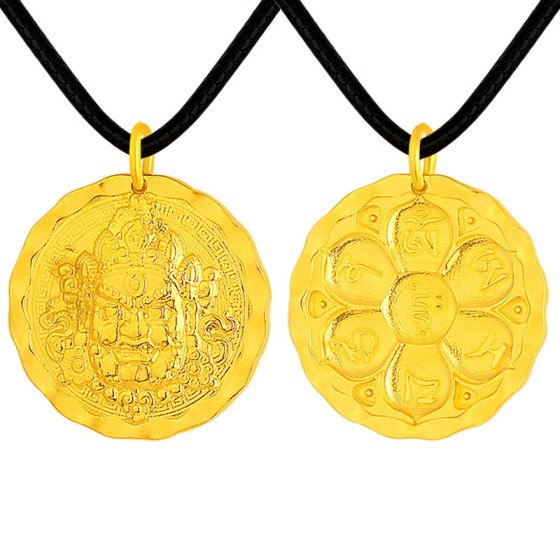
Design Philosophy and Craftsmanship: We strictly utilize classical Tibetan Sanskrit (Lanydza script) for our inscriptions, ensuring the religious sanctity and energetic integrity of every stroke. The calligraphy is elegant and solemn, imbued with flowing spiritual power. Our designs often arrange the six syllables in a clockwise Mandala (sacred circle), symbolizing the perfection and omnipresence of the Dharma realm. The center is often adorned with the "Hrih" seed syllable or a blooming lotus. We also offer relief-style talismans that mimic the texture of Tibetan Mani stones, serving as a portable token of devotion.
Materials and Inlays:
·
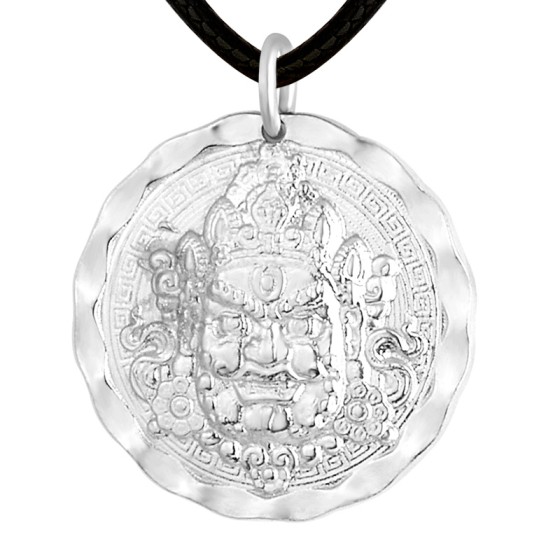
Sterling Silver: Symbolizes the compassion of Avalokiteshvara—cool, pure, and emotionally soothing.
·
·
Gold: Symbolizes the perfected merit and indestructible body of the Buddhas, bringing firm, luminous energy.
·
·
Copper: Traditionally used for ritual implements, offering excellent energy conductivity.
·
·
Gemstone Pairing: We meticulously set stones at specific syllables: Diamonds or Clear Quartz at Om for purity; Red Coral or Agate at Mani for the heat of Bodhicitta; Jade or Turquoise at Padme for the vitality of lotus wisdom; and Obsidian or Lapis Lazuli at Hum for the destruction of obstacles.
·
Size Specifications:
·
Miniature Mantra Wheel (20-25mm): Lightweight and intimate, suitable for daily silent recitation.
·
·
Classic Mandala Model (30-40mm): Clear characters and complete mandala patterns, perfect for visualization and meditation.
·
·
Solemn Prayer Pendant (45-55mm): Visually majestic with rich detail, suitable as a significant ritual object for deep practitioners or as a meaningful gift.
·
5. Wearing and Practice Ritual
The best way to wear this talisman is to integrate it into simple practice. During morning meditation, hold it in your palm or place it against your chest while softly or silently chanting the mantra. Visualize each syllable emitting light of different colors, sequentially purifying and illuminating the six energy centers from the Crown to the Root chakra. Finally, visualize the white compassionate light of Avalokiteshvara flowing from the talisman into your heart, filling your body and radiating outward to benefit all sentient beings.
Your Affirmation: "I recite the essence of Avalokiteshvara, purifying all roots of delusion. May the jewel of my heart bloom within the lotus of wisdom, radiating the light of compassion to benefit all beings."